

From the Head's Study - Multi-cultural intelligence
“I’d like to acknowledge the traditional owners of the land on which we meet – the Gadigal people of the Eora nation, and pay my respects to elders past, present and emerging.”
This, or something like it, is said in Australia at the start of every public gathering of any sort. At the theatre, at a school assembly, at a footie match, at an office staff meeting. It began in the 1970s, and the intention is to acknowledge the importance of the land and the history, and that there were original owners of that land before the English landed there in 1788. “Acknowledgement of Country” is appropriate for anyone to give. However, sometimes the local Aboriginal elder, the traditional owner of the land, can instead, offer a “Welcome to Country”. The important difference is that they have the right to welcome you, whereas others don’t as it is not traditionally their land. A “Welcome to Country” can be very powerful and often involves the elder inviting people to envisage the place where they are meeting over past centuries, or millennia. I wonder who we should be acknowledging here in Pocklington as the traditional owners of this land. I wonder how far back we would need to go before there was just nature here, rather than these historic buildings, and I wonder how the land would have felt then… when there were just the natural valleys and hills, streams, views and vegetation. I wonder what animals would have made this their home.
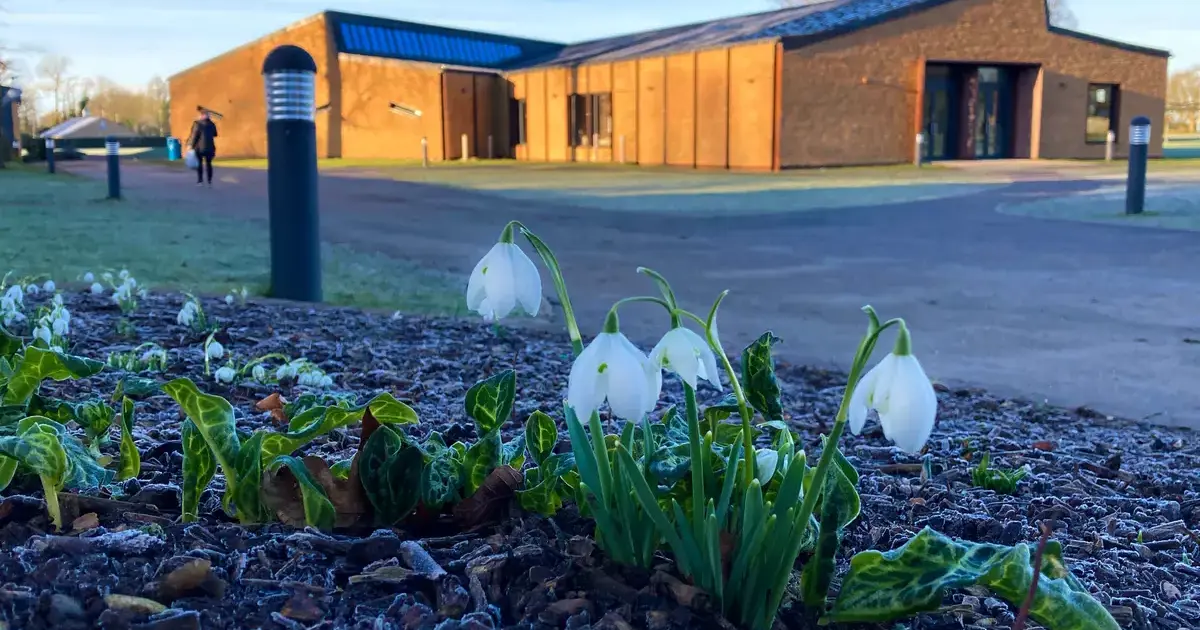
I wonder how far back we would need to go before there was just nature here, rather than these historic buildings.
The reason that is done in Australia, is due to the fact that when the British appeared in 1788 the only inhabitants were the aboriginals to that date, so the impact that had on aboriginal culture is recent enough that it can be recorded, described and articulated. And we would be a combination of arrogant and ignorant to feel that our arrival had a positive outcome for their culture.
Let’s put a pin in that thought for a moment. Let’s talk about intelligence.
Intelligence is a funny concept, in that some people feel you either have it or you don’t (please note that many educationalists would disagree, me being one of them). Some people use it as a yard stick to measure others, some aspire to it, some look down on it or discount it, some use it sensitively, some use it sparingly, and some use it to belittle others or metaphorically beat them over the head with it. But what do we mean by it?
...the concept of intelligence can made richer and more complete by viewing it through other cultural lenses.
In western contexts intelligence is often framed as problem-solving, quick reasoning or analytical skill such as that found in mathematics or the sciences. In some areas of western society, it can be framed as knowing your Literature or your Classics, being able to express yourself articulately and analyse language in depth. Indeed, often those two types of intelligence look down on each other, despite the fact that both are important and complementary! A number of years ago much was made of the idea of multiple intelligences, particularly in education - linguistic, numerical, kinaesthetic, spatial, musical, interpersonal, intrapersonal, naturalistic. But it was long ago agreed that intelligence can’t be categorised or put into pigeonholes in quite that manner. Rather than consider the different types of intelligence as separate or disparate, the concept of intelligence can made richer and more complete by viewing it through other cultural lenses.

To come back to my initial thoughts in this piece, let us consider Australian Aboriginal culture. Particularly Australian aboriginal knowledge systems, which are among the oldest continuous traditions in the world. They offer a perspective in which intelligence is inseparable from relationships, land, community, and deep, lived understanding. Whilst some may consider that Australia has a limited history, taking a narrow view that their society did not start until we got there, when we speak about the Aboriginal culture and history, then it gives us a run for our money. There is archaeological evidence showing human presence in Australia for at least 65,000 years, predating European settlement by tens of thousands of years, and incorporating ancient traditions, art, and deep spiritual connections to the land passed down through generations.
There are some similarities but importantly, notable differences in the western perception of intelligence and the Aboriginal perception of intelligence that are worth contemplating.
In our society and culture, a modern-day definition of intelligence would include adaptability and continuously improving how you think. It would include pattern-finding, curiosity and emotional awareness. It would appreciate that there isn’t a single measure that can capture the full range of human thinking, but it would perhaps fall short of the realisation that society thrives not on one kind of intelligence, but on a diversity of many types. We need different perspectives and approaches to survive as a species.
Aboriginal cultures also emphasise that idea of adaptability and change, but within a long continuum of knowledge across generations. They do not see knowledge as owned by an individual, but as communal and passed on through story, ceremony and experience. They emphasise that wisdom comes from relationships between people, land, ancestors, plants, animals and the spiritual world. To them, to know something is to know how it fits within a wider web of responsibilities. Knowing is inseparable from responsibility. Knowledge is often considered sacred and must be handled with care, consent and respect. This reframes intelligence: to be intelligent is to contribute to the wellbeing of the community and country. Part of that is not quick problem-solving, but the capacity to think in “deep time” and understand how today’s actions connect to ancestral pasts and to future generations.
So, if we sit with this for a moment, a slightly challenging question emerges: what if the way we currently define and reward intelligence only captures part of what really matters? Western society has undoubtedly enabled remarkable progress, innovation and knowledge. But no society, however successful, gets everything right all of the time. Questioning our assumptions is not an act of criticism; it is often the first step towards growth.
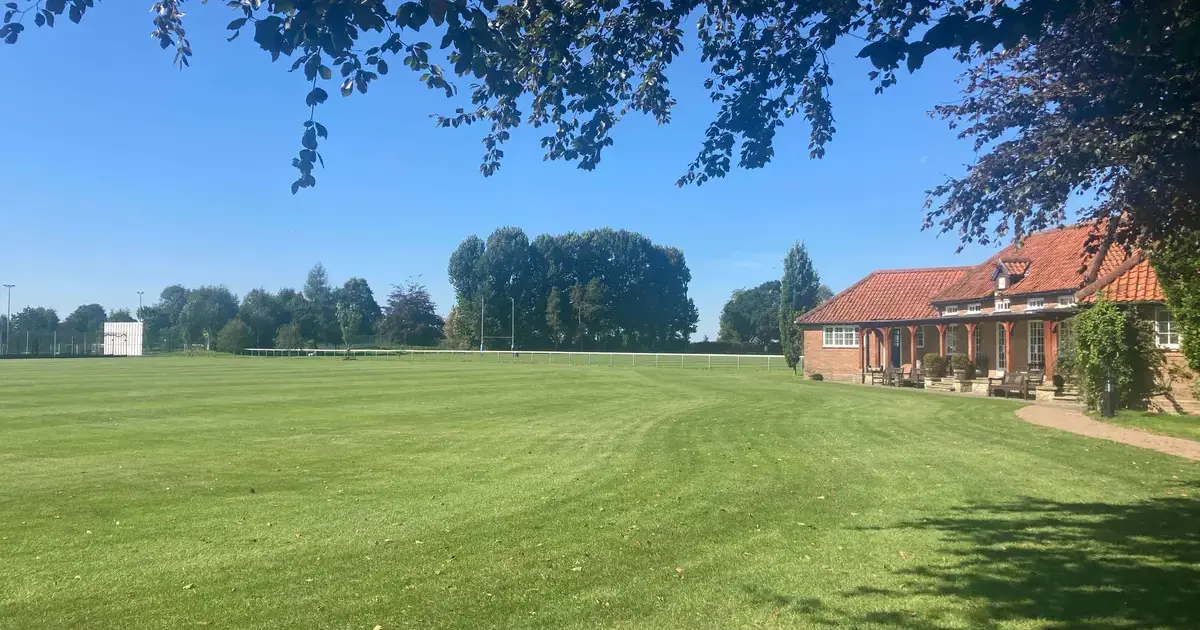
...to be intelligent is to contribute to the wellbeing of the community and country.
One of the challenges we face today is that intelligence is still frequently treated as an individual possession: something that, in schools particularly, we measure, rank, and compare. Speed, certainty and personal achievement are highly prized. Yet many of the issues our world is grappling with, such as social division, environmental responsibility, belonging, wellbeing, cannot be solved quickly or importantly, alone. They demand something broader. They demand patience, collaboration, care, and a willingness to listen to viewpoints different from our own.
...many of the issues our world is grappling with, such as social division, environmental responsibility, belonging, wellbeing, cannot be solved quickly or importantly, alone.
This is where Aboriginal or other perspectives offer not a replacement for our ways of thinking, but an important addition. And whilst I’ve focused on Aboriginal cultures here as it is something I know a bit about, there are many other cultures worth considering as well. They remind us that intelligence does not sit neatly within a single person, but across relationships between people, between generations, and between humans and the land. Knowing something is not just about understanding it, but about recognising the responsibilities that come with that understanding. Decisions are weighed not only for their immediate outcome, but for their long term consequences.

Seen this way, intelligence becomes collective. It grows through shared experience, through learning from one another, and through recognising that different people bring different strengths. No single perspective is sufficient, but together they form something richer, more resilient, and ultimately more sustainable. Communities thrive when individuals understand both their uniqueness and their interdependence.
And when we begin to think like that, we shift away from asking only “What can I achieve?” towards asking “How do my actions affect others, this place, and the future?” It is a way of thinking that asks each of us to locate ourselves within a wider whole, and to recognise that we matter not in isolation, but in relationship. We appreciate others’ differences not as a threat because they are different to our own, but as complementary and interesting because they are different.
Connectedness is key. And understanding both where you fit, and that you have a part to play, is core to that.
Connectedness is key. And understanding both where you fit, and that you have a part to play, is core to that.
Discover more at
Pocklington